
History
"City of Trees and Homes"
History of West Covina
The history of West Covina, California, is a fascinating journey that spans from ancient indigenous settlements and Spanish land grants to a quiet agricultural community affectionately known as "a huge walnut grove with a mayor," ultimately blossoming into a bustling modern suburban hub in the San Gabriel Valley.
Indigenous Heritage & Early Settlement
Long before modern borders were drawn, the "Tongva (Gabrieleño)" people were the earliest inhabitants of the San Gabriel Valley, utilizing the local waterways, native oak woodlands, and fertile soil for trade, hunting, and seasonal camps. Following the establishment of the San Gabriel Mission in 1771, the region became tied to mission administration and livestock grazing.
Connect With Us
We are constantly expanding our network of city guides and local business listings. Have questions, feedback, or want to showcase your business on WestCovina.City?
Hot LIne Number:
(626) 888-4488
The Rancho Era
In the mid-19th century, much of the land that makes up present-day West Covina was part of the expansive "Rancho La Puente", which was granted to pioneers "John Rowland and William Workman" by Mexican Governor Pío Pico in 1845. This era transitioned the valley into a cattle-ranching and hide-and-tallow economy.
The Agricultural Boom: Walnuts and Citrus
Permanent non-indigenous settlement began in earnest around 1905 when homesteaders arrived to clear the native sagebrush and cactus. They discovered that the soil and climate were ideal for agriculture. For decades, West Covina thrived as a pastoral farming community dominated by vast walnut groves and sweet-smelling orange orchards. At its height, the region was so rural and agricultural that locals affectionately described it as a giant walnut grove.
Incorporation in 1923: A Defense of Local Resources
West Covina’s path to cityhood was sparked by an unexpected territorial conflict. In early 1923, the neighboring City of Covina planned to build a municipal sewage farm within the borders of what is now West Covina.
Determined to protect their land and groundwater, local residents led by "Benjamin Franklin Maxson Jr." organized quickly. On February 17, 1923, voters overwhelmingly approved incorporating as an independent city, successfully blocking the project and securing local autonomy over zoning and civic resources. Benjamin Franklin Maxson Jr. served as the city's founding mayor.
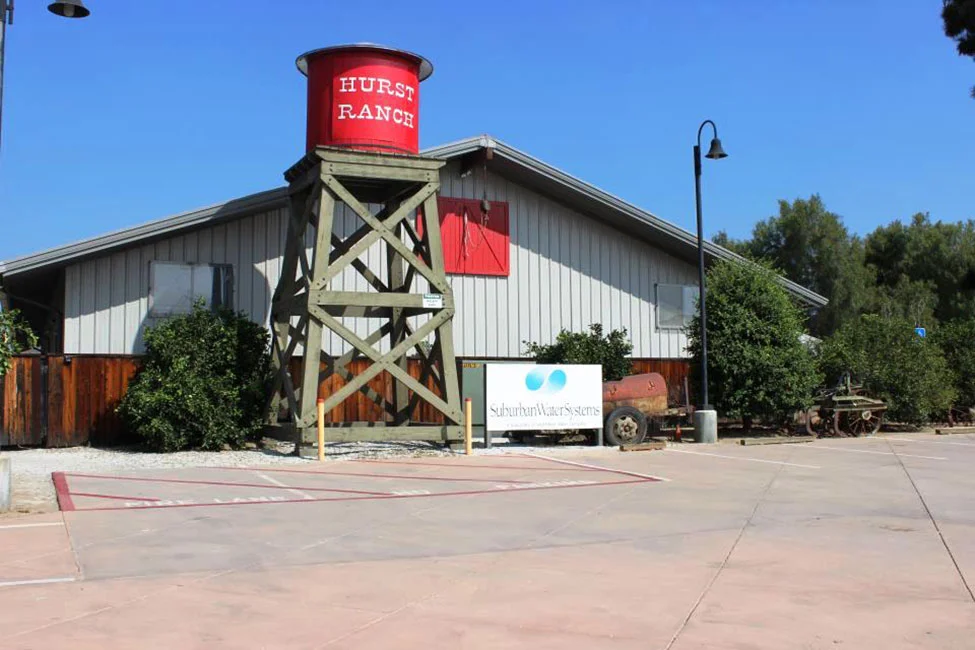
Hurst Ranch Historical Center
CAN BE RENTED FOR WEDDINGS &
SPECIAL EVENTS
Community Hall Rental
Non-Profit and Civic Groups
Wedding and Parties
https://maps.app.goo.gl/RFjE8UaYEULrCC2E9